The Enduring Legacy of Datsun: From Humble Beginnings to Global Icon and Beyond
The Enduring Legacy of Datsun: From Humble Beginnings to Global Icon and Beyond
When you hear the name Datsun, what comes to mind? For many, it conjures images of nimble sports cars, reliable sedans, or rugged pickups from a bygone era. For others, it might be a brand associated with budget-friendly transportation in emerging markets. It’s a fascinating story, really, spanning over a century, marked by innovation, ambition, and a surprising re-emergence. I think it’s fair to say that Datsun isn’t just a car brand; it’s a significant chapter in automotive history, a name that shaped the perception of Japanese automobiles globally.
The Dawn of an Automotive Vision: Early Years and Formation
The Datsun story actually begins much earlier than you might expect, way back in 1911. That's when Masujiro Hashimoto established the Kwaishinsha Motor Car Works in Tokyo. Their first car, completed in 1914, was a 10-horsepower, two-cylinder model they called the DAT. The name itself was an acronym formed from the family names of the company's three main investors: Kenjiro Den, Rokuro Aoyama, and Shunzo Takeuchi. It's a neat bit of trivia, I think, showing the collaborative spirit right from the start.
Over the next few years, the company saw a few name changes and mergers. They produced vehicles not just for personal use but also trucks for commercial purposes. In 1926, Kwaishinsha merged with Jitsuyo Jidosha Co., Ltd. to form DAT Jidosha Seizo Co., Ltd. Pretty soon, the focus shifted to smaller, more affordable cars. This is where the 'son' part of Datsun comes in. When they introduced a new small car in 1931, they initially called it 'Datson,' meaning 'son of DAT.' But, you know, 'son' in Japanese also means 'loss.' So, to avoid any negative connotations, they smartly changed it to 'Datsun,' with 'sun' symbolizing the rising sun flag of Japan. A pretty clever marketing move, if you ask me.
The company we know today as Nissan took control of DAT Motorcar Co. in 1934, making Datsun its primary brand for its small car production. This merger laid the groundwork for Datsun's future expansion, especially into international markets.
Breaking Barriers: Datsun's Global Ascent
After World War II, Japan's automotive industry began to rebuild, and Datsun was at the forefront of this resurgence. By the 1950s and 60s, the company really started looking beyond Japan's borders, especially towards the lucrative North American market. I bet you can just imagine the challenges they faced back then – overcoming perceptions that Japanese cars were somehow inferior or just plain odd. But Datsun met those challenges head-on with a commitment to quality, reliability, and affordability.
One of the earliest successes was the Datsun Bluebird. This compact sedan, introduced in the late 1950s, offered a blend of practicality and decent engineering. It was a no-nonsense car that simply worked, and for a lot of American families, that was exactly what they needed. It wasn't flashy, but it was honest transportation, and it started to build trust in the brand. You'd see these cars pretty much everywhere.
The Game Changers: Iconic Models That Defined an Era
- The Datsun Fairlady (Sports Line): Before the Z-cars, there was the Fairlady. Introduced in the late 1950s and early 1960s, these open-top sports cars were Japan's answer to British roadsters. They weren't just fun; they showed the world that Japanese manufacturers could produce exciting, stylish vehicles. I've always admired their classic lines; they just scream 'old-school cool' to me.
- The Datsun 510 (The "Poor Man's BMW"): Ah, the 510. This car is a legend for good reason. Launched in 1968, the 510 was a compact sedan and coupe that offered independent rear suspension, a powerful overhead-cam engine, and excellent handling, all at a price point that utterly undercut its European competitors. It quickly earned the nickname "the poor man's BMW" because it delivered driving dynamics usually found in much more expensive cars. It was also a dominant force in motorsports, particularly in Trans-Am racing, which certainly didn't hurt its reputation. I think it's fair to say that the 510 really cemented Datsun's image as a serious player.
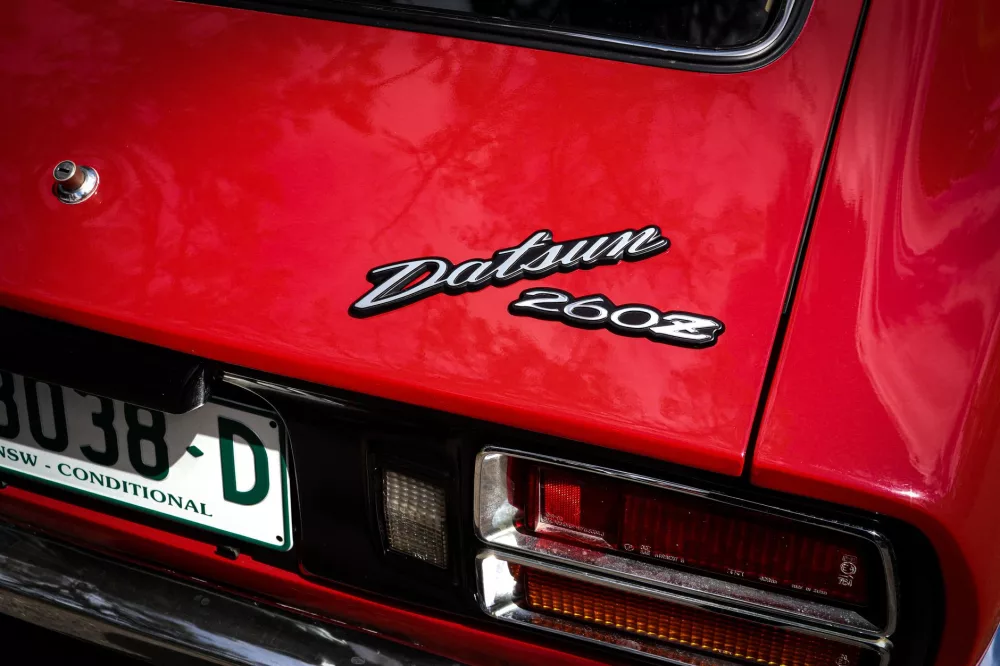
- The Datsun Z-Cars (240Z, 260Z, 280Z): And then there were the Z-cars. When the Datsun 240Z (known as the Fairlady Z in Japan) hit the North American market in 1969, it was a revelation. It offered stunning looks, a smooth and powerful inline-six engine, and impressive performance, all at a price that made Porsche and Jaguar owners rethink their choices. It was an instant hit, quickly becoming one of the best-selling sports cars of all time. We’re talking about a vehicle that totally changed perceptions, transforming Datsun from a maker of reliable economy cars to a producer of desirable, high-performance machines. These cars, with their long hoods and sleek profiles, just have an undeniable presence.
- Datsun Pickups: Alongside the passenger cars, Datsun also built a strong reputation for its sturdy and dependable pickup trucks. These trucks were workhorses, affordable and practically indestructible, especially important in markets where reliability was absolutely critical.
The Controversial Rebranding: Becoming Nissan
Despite Datsun's incredible success, particularly in the US, Nissan Motor Co. made a bold and, for many, controversial decision in the early 1980s: to phase out the Datsun brand globally and consolidate everything under the Nissan name. I know a lot of people were confused, even a little upset by this. Why ditch a name that had such strong positive recognition?
The official reason was pretty straightforward: Nissan, as the parent company, wanted to unify its global identity. They believed that having one strong, globally recognized brand name would simplify marketing, build brand equity, and save money in the long run. There was also the notion that the Datsun name, while successful, still carried an association with cheaper, smaller cars, and Nissan wanted to project a more premium, technologically advanced image. It was a massive undertaking, and for a few years, you'd see cars branded as "Datsun by Nissan" or "Nissan Datsun" before the Datsun name was completely retired in most markets by 1986. It took a while for consumers to adjust, I'll tell ya, but eventually, Nissan became a household name in its own right.
The Return of a Legend: Datsun for a New Generation
Fast forward almost three decades, and guess what? Datsun made a comeback! In 2013, Nissan announced that it was reviving the Datsun brand, not for its traditional markets, but as an entry-level brand aimed at emerging markets like India, Indonesia, Russia, and South Africa. This move made a lot of sense when you think about it. Nissan had identified a massive demand for affordable, reliable new cars in these rapidly growing economies, and they needed a distinct brand to cater to this segment without diluting the Nissan badge.
The new Datsun models, like the Go hatchback and the Go+ MPV, were designed with cost-effectiveness, fuel efficiency, and practicality in mind. They represented a fresh start, trying to embody the original Datsun spirit of offering accessible mobility to the masses. While the modern Datsun isn't about sporty coupes or groundbreaking performance, it does carry on that initial promise of providing reliable, no-frills transportation. It's a different Datsun for a different world, but the core idea of democratizing car ownership is still there. We've seen some ups and downs with this latest iteration, but I think the story of Datsun itself is a powerful reminder that brands can evolve, adapt, and even reappear when the market calls for it. It's a name that has truly traveled through time, always finding a way to stay relevant in the automotive landscape.
About Editorial Team
Senior columnist and culture critic specializing in architectural designs, emerging high-growth systems, and contemporary philosophies.
Contact Desk
Have an editorial inquiry or custom partnership idea? Reach our team directly.